

Box Elder Bugs Invade NE
Omaha, Bellevue, La Vista, Council Bluffs and all other cities surrounding Nebraska cities are familiar with Box elder bugs and other pest control needs.
Boxelder bugs, are familiar insects to most people in Nebraska and Iowa. They are generally not noticed during summer, but often can become an issue when they try to move into homes during fall as they search for overwintering sites. Our exterminators perform free inspections and if necessary recommend affordable control measures.
Box Elder Bug Identification & Appearance
Adult box elder bugs are about 1/2-inch long, black with orange or red markings, including three stripes on the prothorax, the area right behind the head. Their wings lay flat over their bodies, overlapping each other. The immature nymphs are 1/16th-inch long and bright red when they first hatch. As they grow older and become larger, they are red and black. You can potentially see all stages at any given time during the summer.
Biology And Life Cycle
In Nebraska and Iowa, bugs emerge from overwintering sites during spring as the weather starts to warm up. Adults feed on low vegetation and seeds on the ground during spring and
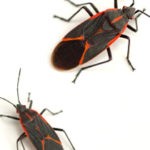
early summer, and begin mating a couple weeks after they started feeding. Starting in mid‑July, they move to female seed-bearing boxelder trees where they lay eggs on trunks, branches, and leaves. They are rarely found on male boxelder trees. Boxelder bugs may also feed on maple or ash trees. There is no noticeable feeding injury to these trees.
During late summer and fall the bugs start to leave the trees from where they were feeding to find protected areas for the Nebraska winter. Adult bugs typically can fly several blocks, although in some cases they can travel as far as two miles.
Boxelder bugs push into cracks and spaces around homes. In some cases they end up in the interior of buildings where they are often found around windows. They remain active until it becomes cold, which could continue into winter when the weather is mild. While you may see persistent numbers of these bugs, individuals are short-lived, only surviving for a few days up to a week. Other boxelder bugs end up in sheltered areas in walls, attics and similar areas where they remain until it warms up.
During Winter
During Winter Boxelder bugs are generally inactive. However, during mild, sunny days, boxelder bugs become mobile with the increased temperature. They enter a home’s interior from overwintering areas within the home, (example) in walls or attics. As they wake up, they follow the warmth into the home’s living quarters. Once there, they typically move towards windows and other sunny areas.
Eventually By Spring
Eventually by Spring all the surviving boxelder bugs that overwintered inside buildings become active. They try to move outdoors but many remain trapped inside. Despite the circumstantial evidence, they do not reproduce in homes — all the boxelder bugs seen inside during winter and spring entered buildings the previous fall.

Importance For Control & Management
Boxelder bugs are primarily a nuisance because they enter homes and other buildings, often in large numbers. Fortunately, they do not bite people and are essentially harmless to property. When abundant, they can stain walls, curtains, and other surfaces with their excrement.
The best management of bugs is prevention — take steps to keep them from entering your home from the start. You can partly do this through exclusion though it largely depends on how your home was constructed. Make any repairs by the end of August. If control measures are necessary, Call Omaha Pest Control at (402) 969-7378 to exterminate the pests.