

Millipedes & Centipedes
Omaha, Nebraska is a city in the center of the agricultural Midwest and centers around the farms and crops that feed our citizens. Successful farming requires successful pest control, your home is no different. Pests can transmit disease so pest management in your house is essential. Millipedes and centipedes have been here in Omaha, NE since day-one and exterminators at Omaha Pest Control, Inc. have over 25 years experience with pest inspection, treatment and control of millipedes, centipedes and other pests.
Millipedes – Facts, Identification & Control
As a household pest, millipedes are more of an annoyance or nuisance, rather than an indoor-breeding pest that causes destruction. Millipedes normally are fo
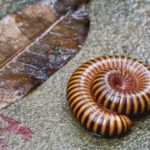
und outdoors of Omaha, NE where they feed on damp and decaying wood, organic material, and will also feed on tender roots and green leaves that have fallen to the ground. This occasional invader has two pair of legs per body segment (as compared to the centipede, which has one pair per segment,) except for the first three segments which have one pair of legs per segment.
Generally, millipedes overwinter in the soil near the foundations of homes, green houses or other structures. Homes are invaded (sometimes in huge numbers) either after heavy rainfall (spring through fall) or when searching for a site to overwinter. For some unknown reason, millipedes at times become restless and leave the soil to crawl into houses. This is most common with homes that have ground-level patio doors, basements or other areas that are easily accessible.
Centipedes – Facts, Identification and Control
Centipedes are flattened , elongated animals with one pair of legs on most of their body sections. This easily distinguishes them from millipedes which have two pair of legs per body section. The total number of legs varies from 10 to more than 100, depending on the species. Centipedes have many-jointed antennae and jaws connected to poison glands which are used to kill insects and other small creatures for food.
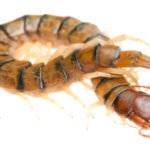
The bite of a centipede, even the largest species found in the United States, is not sufficiently toxic to be lethal man, or even small children. The poison in a centipede’s bite usually produces only a moderate reaction similar to that of a bee sting, but if you are bitten and have a significant reaction, do not hesitate to call your physician. Ordinarily, centipedes dwell outdoors in moist, protected localities: beneath accumulations of leaves, under stones, rotted logs, boards, leaves, bark and compost piles. When disturbed, centipedes run swiftly.
Typical Household Hiding Areas
Millipedes and Centipedes many times will crawl into homes and conceal themselves in various articles, such as shoes, diaper pails, laundry baskets, boxes and damp towels left on bathroom floors. It is not unusual for someone to tell us that they discovered the presence of centipedes while turning over in bed, only to be bitten by the wandering pest! Although they are not considered aggressive towards humans, centipedes to not like to be cornered or touched and will respond defensively in such situations.